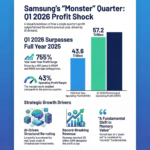

Recent jitters in the South Korean semiconductor sector have led to a slight correction in stock prices. However, according to the latest sector report from DS Investment & Securities (April 1, 2026), this is a “normalization process” rather than a peak-out signal.
1. Spot Prices vs. Contract Prices: Know the Difference
While retail investors often focus on Spot Prices, the real earnings of giants like Samsung and SK Hynix are driven by Contract Prices.
- The Gap: Currently, DDR5 and DDR4 spot prices maintain a premium of 60-90% over contract prices. Even if spot prices fluctuate, the upward pressure on contract prices remains solid through Q4 2026.
- Inventory: The recent dip is simply a result of downstream companies managing their pre-stocked inventory, not a drop in structural demand.
2. The New Era of LTA (Long-Term Agreements)
Unlike past cycles where margins crumbled quickly, the current cycle is reinforced by Long-Term Agreements (LTA). These contracts set price floors and secure volumes, ensuring stability even during broader market fluctuations. This structural shift is re-rating memory makers from “cyclical” to “growth” stocks.
3. The Supply Tightness Continues Until 2027
Despite increased Capex, most investments are concentrated on HBM and advanced processes.
- Conventional DRAM Shortage: Supply for general-purpose DRAM will likely remain tight until the end of 2027.
- AI Anchor: As long as Cloud Service Providers (CSPs) maintain their AI infrastructure investments, the floor for demand is rock-solid.
Hoi’s Insight
Based on this DS report, the upcoming earnings season in April and May will be the primary catalyst for the next leg up. For global investors, the current ‘noise’ in spot prices is creating a tactical entry point into the structural AI memory growth story