Samsung’s 57.2T KRW Earnings Surge: Why the DS Division’s 4,780% Growth is Just the Beginning

[Key Insights at a Glance]
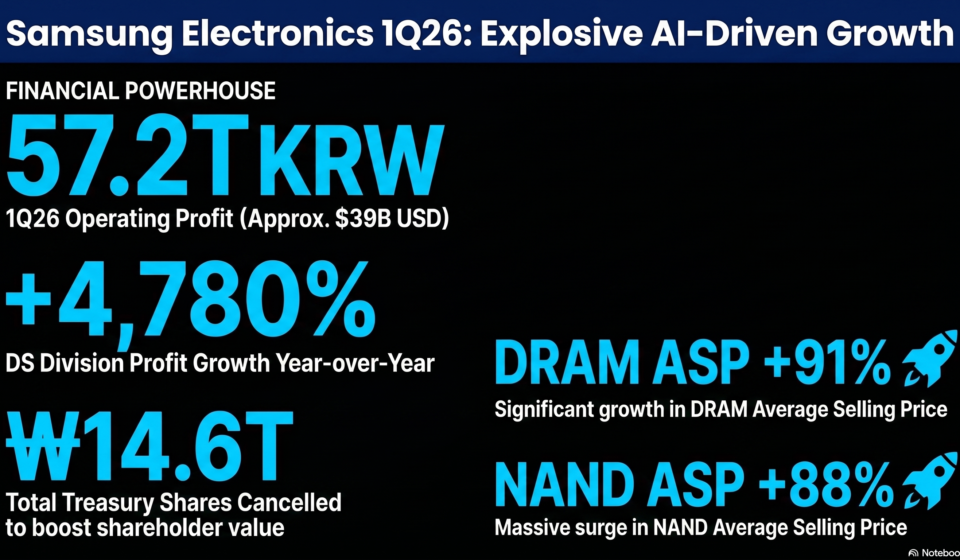
- 57.2T KRW (~$39B) Operating Profit: Total profit surged 760% YoY, with the DS division alone contributing 53.7T KRW (4,780% YoY) — 94% of group operating profit.
- DRAM +91% / NAND +88% ASP (QoQ): Server shipments hit a quarterly record as AI demand overwhelms available supply. Fulfillment rate is now at an all-time low.
- ₩14.6T Share Cancellation: 73.36M common + 13.6M preferred shares retired, directly boosting EPS.
[Deep Dive Analysis]
Q1 2026 confirms this is no ordinary upcycle. Agentic AI is driving simultaneous demand across both AI and general-purpose servers — and supply simply cannot keep up. New fab lead times create a hard ceiling on capacity expansion, pushing Samsung’s demand fulfillment rate to an all-time low. Customers are already booking 2027 volumes, and the supply gap is expected to widen further.
To lock in this visibility, Samsung is converting customer demand into binding Long-Term Agreements — a structural shift from the informal arrangements of prior cycles that materially reduces earnings volatility going forward.
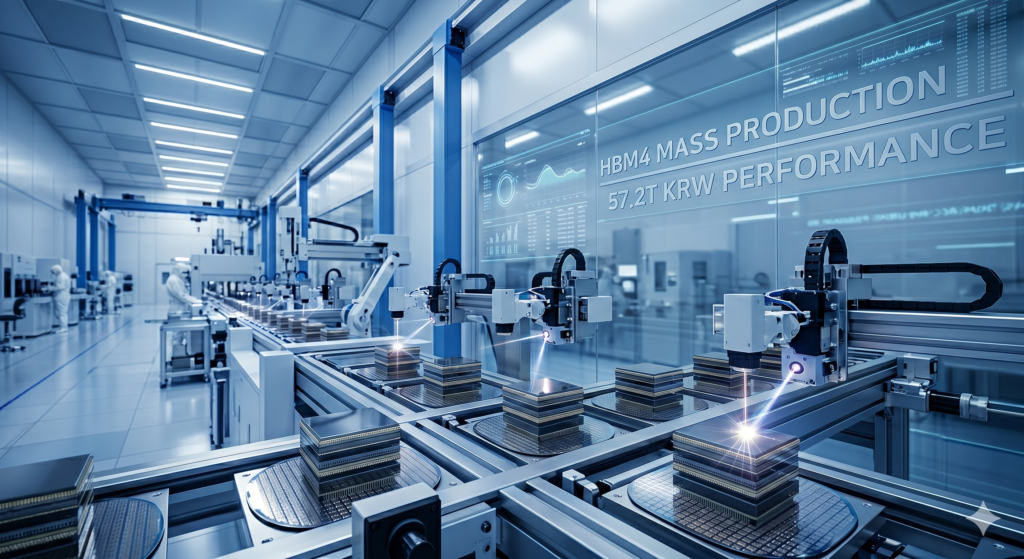
The current “Dual Market” dynamic is worth watching closely. General DRAM is temporarily outpacing HBM on profitability due to faster quarterly pricing resets. But with HBM’s supply-demand gap widening, Samsung expects this gap to reverse significantly by 2027. HBM revenue is forecast to more than triple YoY, with HBM4 — now in mass shipment — exceeding 50% of total HBM revenue from Q3 onward. HBM4e samples follow in Q2. On the NAND side, Samsung is targeting early leadership in the PCIe Gen 6 server SSD market in H2 2026.
One near-term watch item: the union has announced a general strike (May 21–June 7). Management has contingency plans in place, but any bonus settlement could create a Q2 earnings headwind not yet reflected in numbers.
[💡 Editor Hoi’s Strategic Insight]
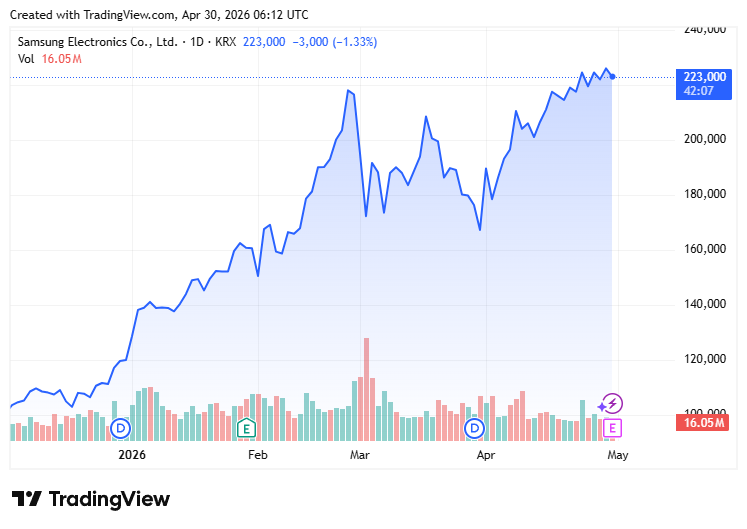
Three forces are compounding at once — ASPs rising faster than expected, LTA contracts building multi-year revenue visibility, and a ₩14.6T buyback amplifying per-share earnings. The near-term noise (strike risk, Q2 provisioning) is real but looks transient against a backdrop where 2027 orders are already queued and supply remains structurally constrained. This is a structural re-rating story, not a cyclical peak.